Integrative modeling of genome machines
We build atomic models of the assemblies that replicate, transcribe and repair DNA, set them in motion with simulation, and trace how single mutations disable them in human disease.

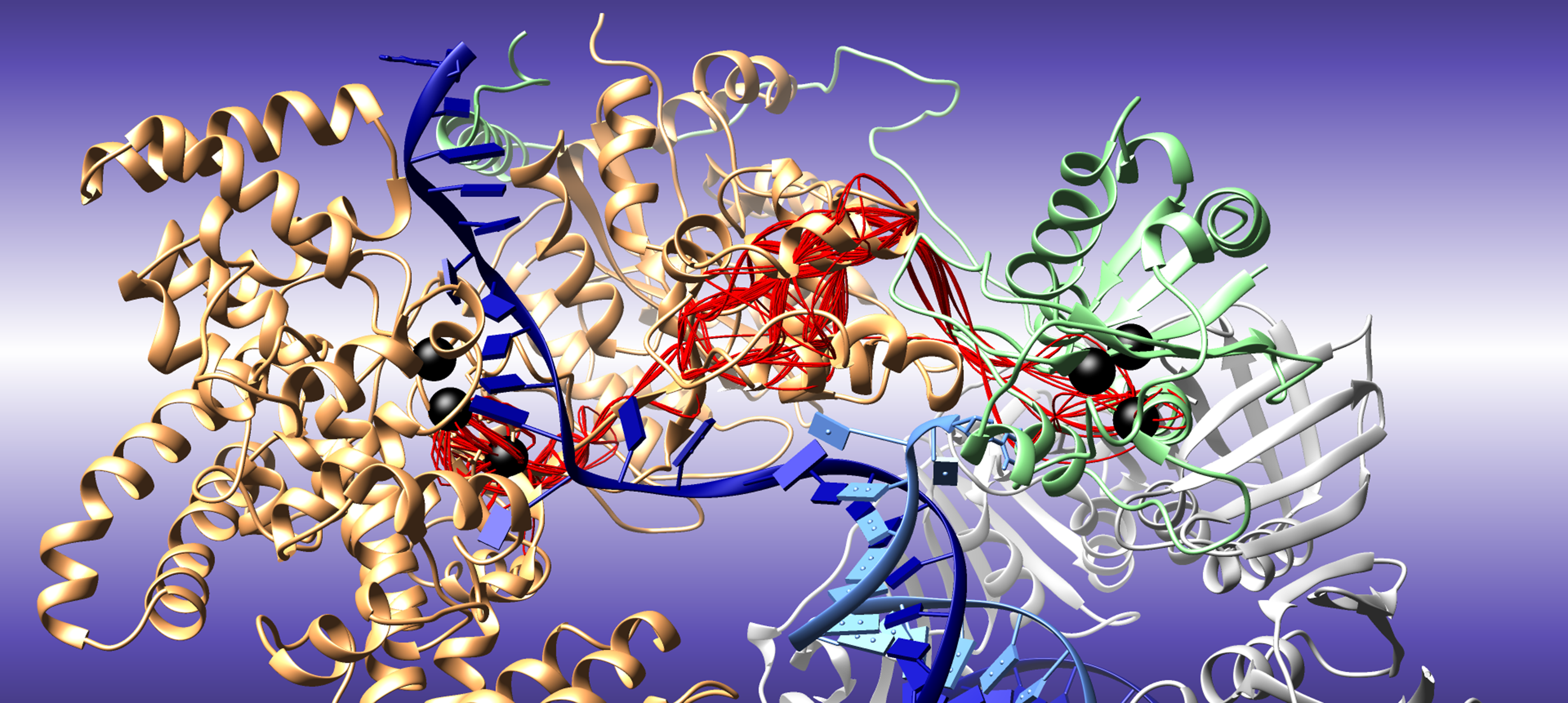
Integrative model of the transcription preinitiation complex uncovers origins of genetic diseases. Spheres mark xeroderma pigmentosum, Cockayne syndrome and trichothiodystrophy mutations. 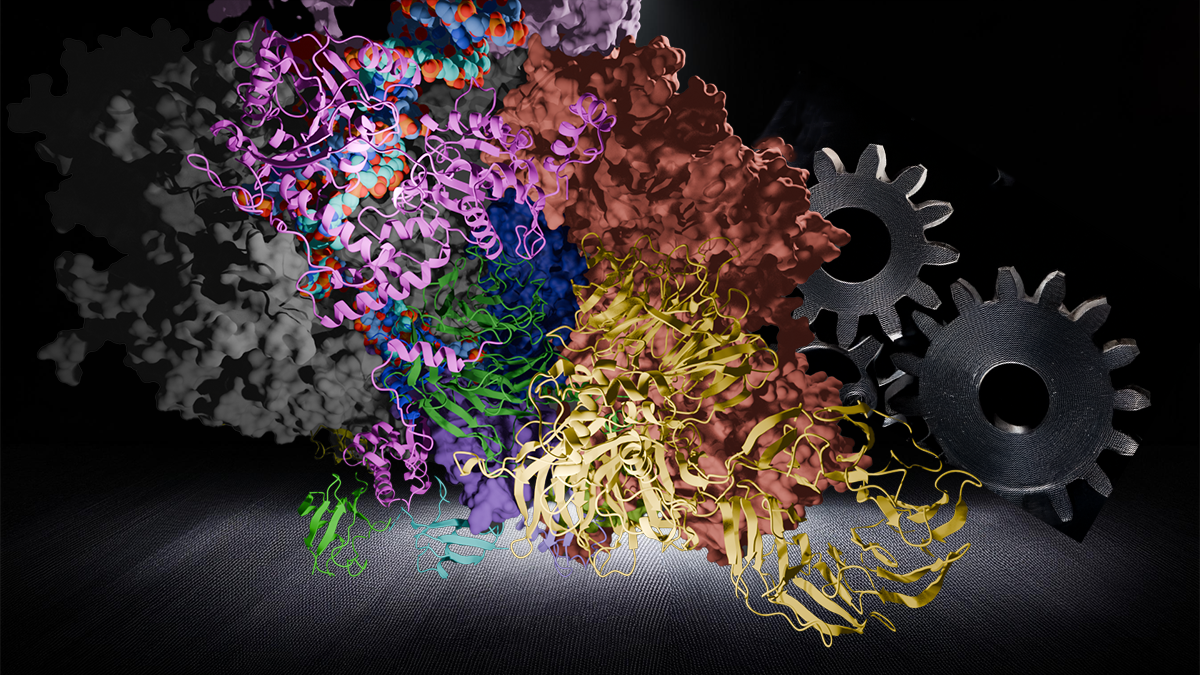
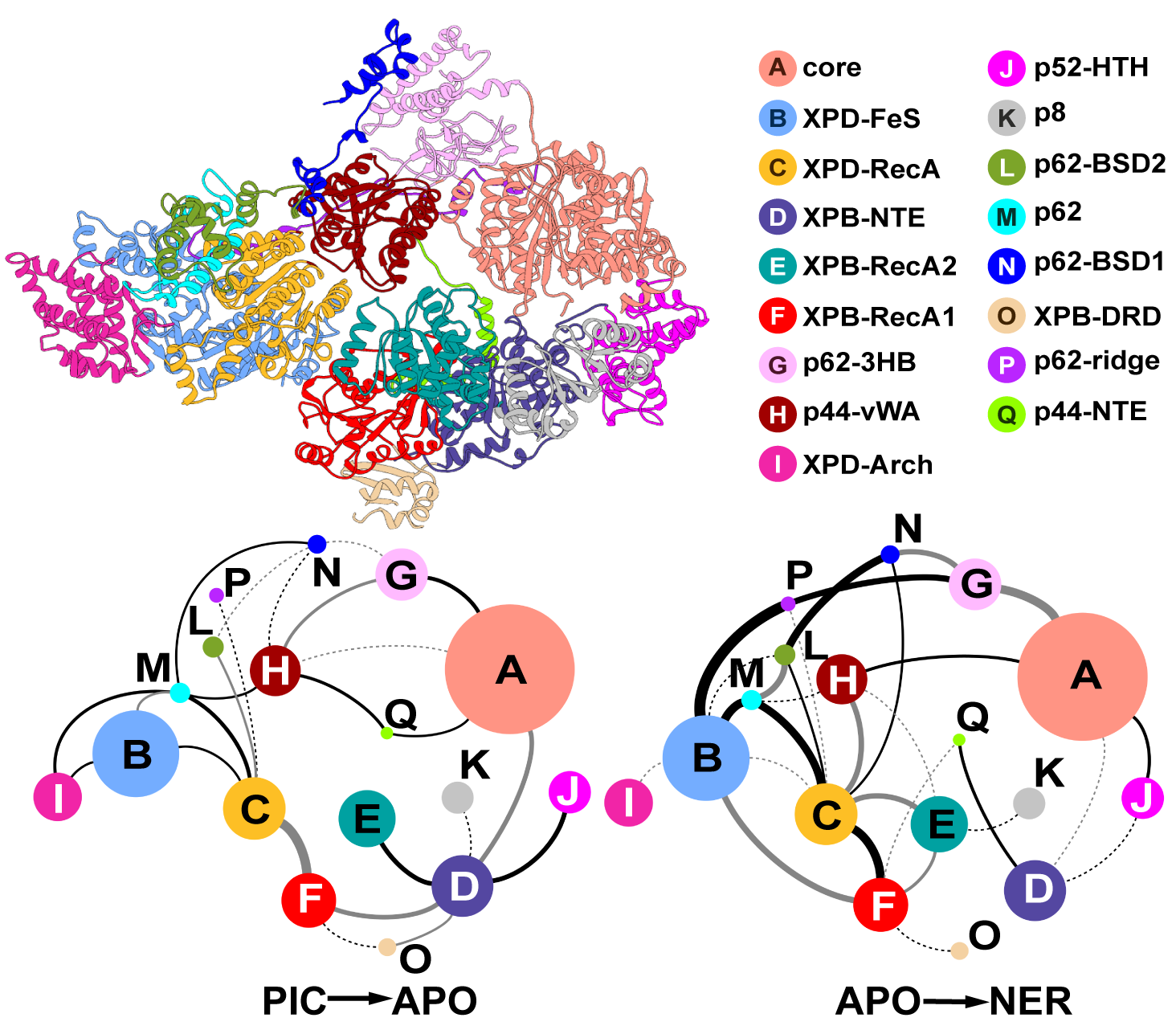
Transcription-coupled repair molecular machinery. 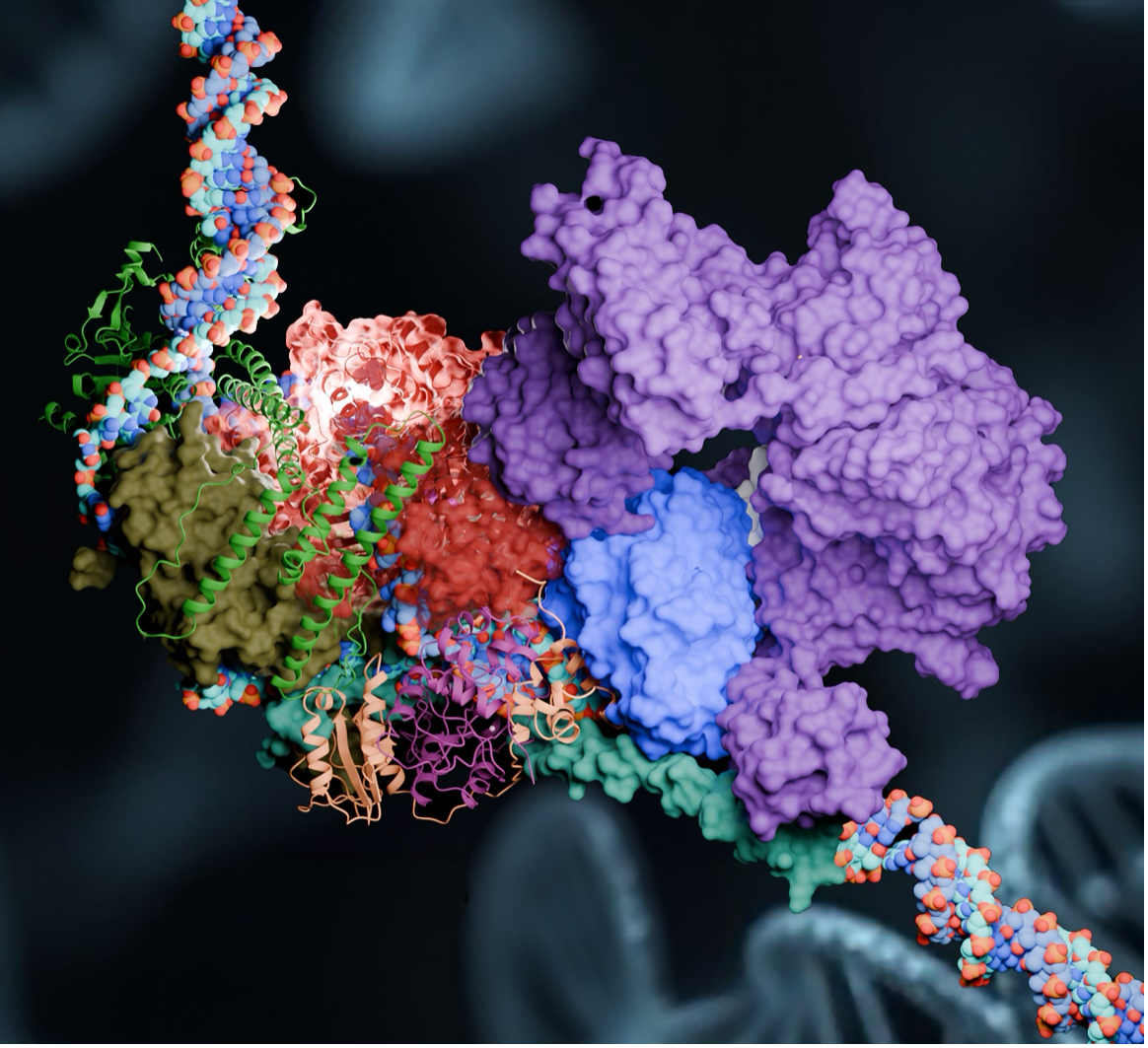
Pre-incision complex in global genome repair. 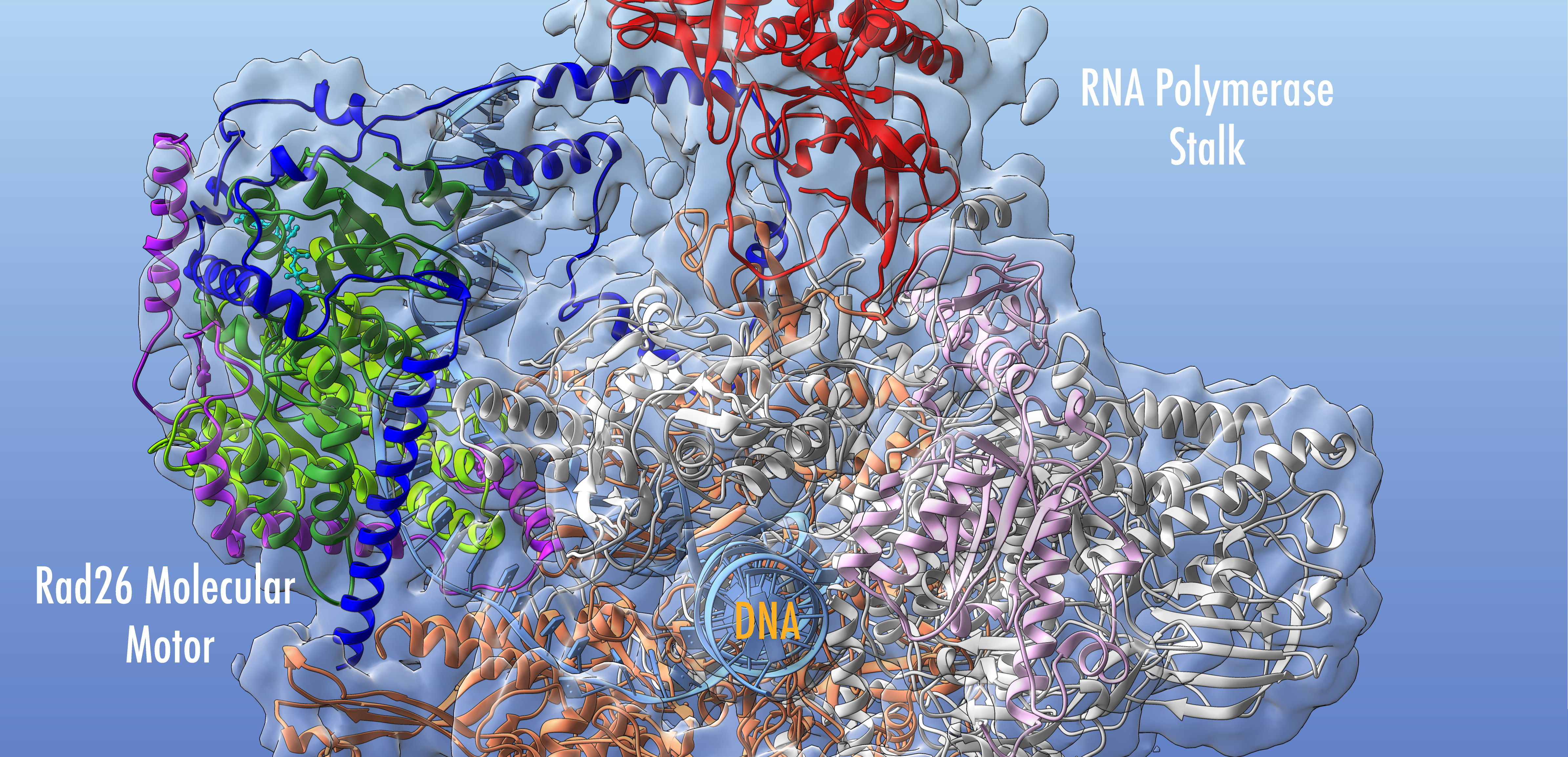
The Rad26 molecular motor rescues stalled RNA polymerase II in transcription-coupled repair. 
Our group has held DOE INCITE awards for time on the nation’s leadership-class supercomputers every year since 2019.
How cells copy, read and repair their genome
We combine cryo-EM, small-angle X-ray scattering and single-molecule data with large-scale simulation on leadership-class supercomputers.
DNA repair
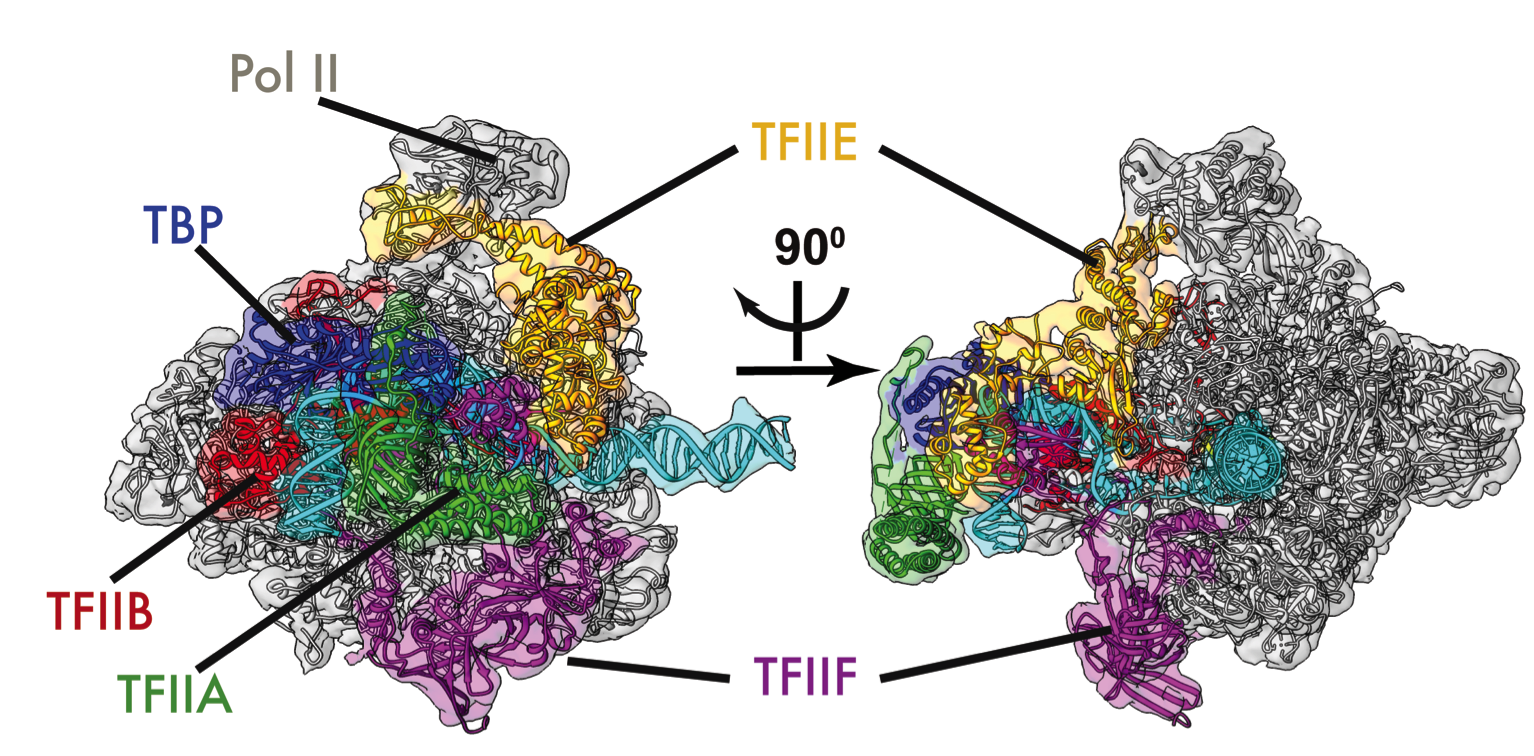
TFIIH, XPD and the nucleotide excision repair machinery, and the mutations behind genetic disease.
DNA replication
Sliding clamps, clamp loaders and the proofreading switch of high-fidelity polymerases.
Recent papers
- Translocation mechanism of xeroderma pigmentosum group D protein on single-stranded DNA and genetic disease etiology
Paul, Yan, Derdeyn-Blackwell & Ivanov · Nature Communications - Molecular model of TFIIH recruitment to the transcription-coupled repair machinery
Paul, Yan, Yu, Tsutakawa, Tainer, Wang & Ivanov · Nature Communications 16, 2341 - Molecular architecture and functional dynamics of the pre-incision complex in nucleotide excision repair
Yu, Yan, Paul, Brewer, Tsutakawa, Tsai, Hamdan, Tainer & Ivanov · Nature Communications 15, 8511
News
- Our new websiteOur group website has a new look, with research pages for each of our areas, a complete publication list and a gallery of simulation movies.
- New preprint on bioRxivLeonardo Serafim leads our new bioRxiv preprint on the “moving metal ion” mechanism of the DNA repair nuclease APE1.
- New paper in Nature CommunicationsLeonardo Serafim is a co-author on a new Nature Communications paper defining a unified catalytic mechanism for the bifunctional DNA glycosylases OGG1 and NTH1.
Join the group
We welcome inquiries from prospective postdoctoral researchers, PhD students and undergraduates in computational biophysics.

