Tag: group news

  • Our new website

    Our new website

    Our group website has a new look. Along with a cleaner design that also works on phones, the site now includes:

    Papers, awards and other group news will continue to appear on the News page.

  • New preprint on bioRxiv

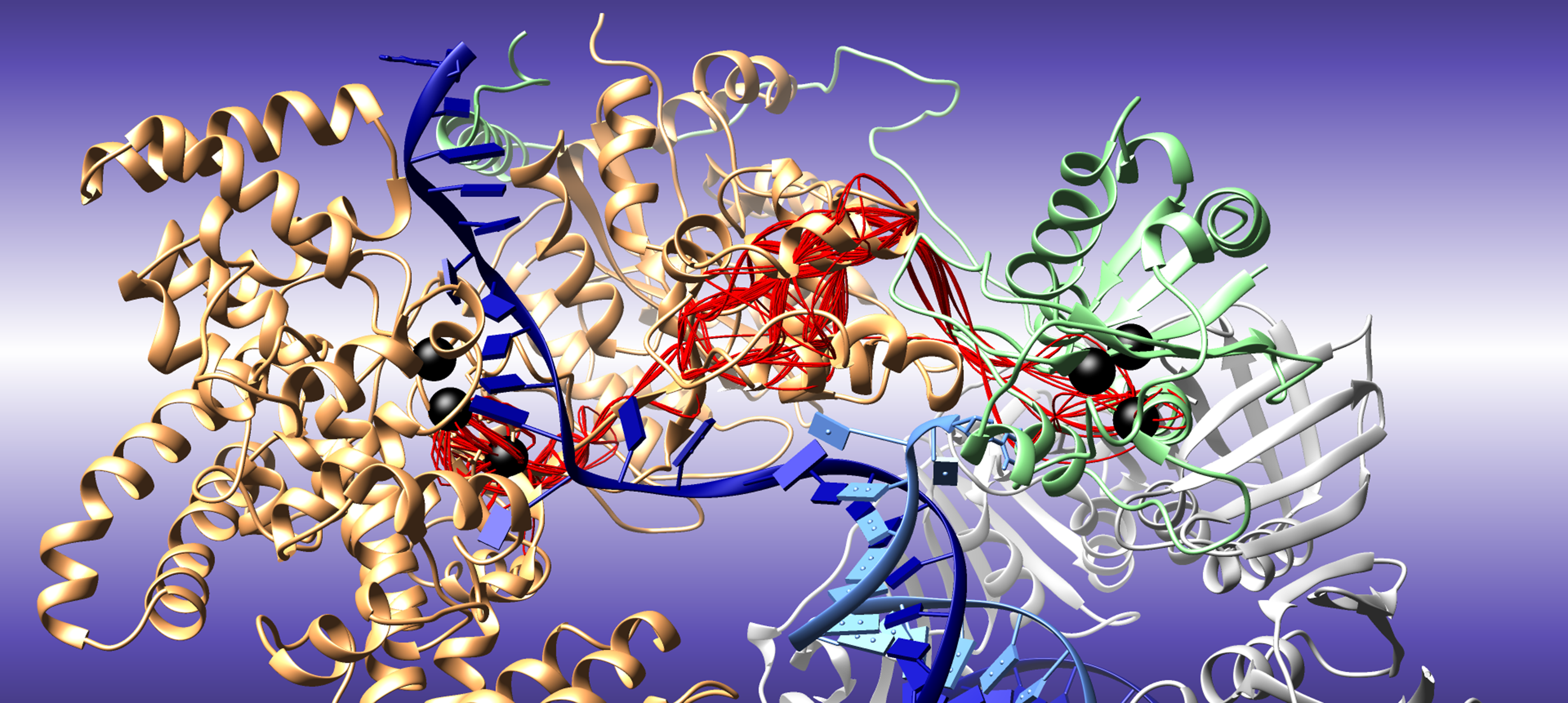
    Congratulations to Leonardo Serafim, first author, and to group alumnus Brad Kossmann on our new preprint on bioRxiv entitled “Orchestrated metal ion repositioning defines the dynamic catalytic strategy of the essential DNA repair nuclease APE1”, a collaboration with John Tainer, Susan Tsutakawa, Sankar Mitra and David Wilson III.

    Human AP-endonuclease 1 (APE1) is a central enzyme of base excision repair: it cuts DNA at abasic sites, among the most common lesions in the genome. How it achieves high specificity and efficient catalysis with a single metal ion has been unclear. We report a high-resolution structure of the APE1–DNA Michaelis complex with its physiological Mg2+ cofactor. Combining this structure with molecular dynamics and metadynamics simulations, we uncovered a “moving metal ion” mechanism: the Mg2+ ion repositions in a coordinated way to trigger a concerted reaction, without forming a pentavalent intermediate.

    A previously unrecognized hydrogen-bonding network couples activation of the catalytic water to the movement of the metal ion, two events that occur on opposite sides of the active site. The findings show how enzymes synchronize distant active-site rearrangements with the transition state, and provide a foundation for designing inhibitors of APE1, which is overexpressed in cancer.

    Serafim, L. F., Tsutakawa, S. E., Arvai, A. S., Kossmann, B. R., Mantha, A. K., Abbotts, R., Wilson III, D. M., Mitra, S., Tainer, J. A. & Ivanov, I.* bioRxiv 2026.05.11.724140.
  • New paper in Nature Communications

    New paper in Nature Communications

    Nature Communications

    Congratulations to Leonardo Serafim, co-author on a just published paper in the journal Nature Communications entitled “A unified catalytic mechanism in bifunctional DNA glycosylases with an evolutionarily conserved aspartate-lysine dyad”, a collaboration with John Tainer’s group at MD Anderson Cancer Center.

    Bifunctional glycosylases, OGG1 for oxidized purines and NTH1 for oxidized pyrimidines, repair oxidatively damaged DNA bases through two consecutive reactions: removal of the damaged base and cleavage of the DNA backbone (the AP-lyase step). Combining crystal structures of archaeal and human OGG1 and NTH1, captured in damage-recognition and catalysis-ready states, with ab initio molecular dynamics simulations of their complete reaction pathways, we defined a single catalytic mechanism shared by both enzymes and conserved over three billion years of evolution. It differs from the oxocarbenium-ion mechanism of monofunctional glycosylases: ribose protonation and ring opening come before the base is cut free, and a conserved aspartate-lysine pair acting as an acid-base catalyst lowers the barrier for breaking the glycosidic bond.

    Structures of human OGG1 bound to product DNA, with and without the small-molecule activator F51, show that such activators speed up the enzyme by helping it release its product. These results open a route to chemical tools for probing the lyase reaction and to therapeutics against oxidative DNA damage in cancer and aging.

    Syed, A., Serafim, L. F., … Ivanov, I.* & Tainer, J. A.* Nature Communications 17, 8681 (2026).

  • New INCITE project awarded for 2026

    incite-logo-2010

    Our INCITE Award was competitively renewed for 2026 by the DOE Office of Science. Open to researchers from academia, government laboratories, and industry, the Innovative and Novel Computational Impact on Theory and Experiment (INCITE) program is the major means by which the scientific community gains access to the world’s fastest supercomputers. The program aims to accelerate scientific discoveries and technological innovations by awarding, on a competitive basis, time on supercomputers to researchers with large-scale, computationally intensive projects that address “grand challenges” in science and engineering.

    Our research team will continue to combine cryo-electron microscopy data and state-of-the-art computation on the OLCF Frontier supercomputer to elucidate the mechanisms controlling gene expression. Specific focus for next year will be on nucleotide excision repair (NER) – the most versatile pathway for eliminating lesions in genomic DNA caused by exposure to environmental carcinogens. Defining the molecular mechanisms of NER and the impact of disease-associated mutations in the vital NER complexes will provide a foundational understanding of severe human genetic disorders, including xeroderma pigmentosum, trichothiodystrophy, and Cockayne syndrome. The insights gained will illuminate how environmental and genetic factors contribute to cancer, aging, and developmental defects, ultimately informing new strategies for treatment and prevention.


  • New paper in Nature Communications

    Congratulations to Tanmoy Paul, Chunli Yan and Grant Derdeyn-Blackwell who are co-authors on a just published paper in the journal Nature Communications entitled “Translocation mechanism of xeroderma pigmentosum group D protein on single-stranded DNA and genetic disease etiology”. We investigated the molecular basis of translocation by the xeroderma pigmentosum group D (XPD) helicase on single-stranded DNA (ssDNA), a process essential for DNA damage verification in the nucleotide excision repair (NER) pathway. XPD is a 5′–3′ helicase that functions as the motor subunit of the TFIIH complex in NER. XPD’s activity is vital for genome maintenance.

    To define its structural mechanism, we combined structure modeling with advanced simulations, including chain-of-replicas path optimization, transition path sampling, and Markov state modeling. These methods allowed us to characterize the conformational ensembles of apo, ADP-bound, and ATP-bound XPD and map the full free energy landscape of its ATPase cycle. Our analysis uncovered two distinct constrictions along the path of ssDNA located at the opposite ends of the DNA-binding groove. These function as alternating clamps that capture and release ssDNA in a coordinated manner. DNA translocation results from the dynamic interplay of the motor domains and the two constrictions. We establish a novel structural relationship between the movement of the XPD motor domains (RecA1 and RecA2) and the reciprocal rearrangement of the Arch domain, mediated by hydrophobic interactions involving the spring helix of RecA2 and the Arch domain. This coordinated conformational switching of XPD’s domains resembles the mechanism seen in SF1B helicases. Notably, the posited mechanism differs from the scaffold inversion strategy used by SF1A enzymes.

    Impairment of NER by mutations causes severe human genetic disorders, highlighting the need for molecular-level understanding of XPD’s function. We therefore examined the functional  impacts of XPD-associated disease mutations and found that many cluster in regions essential for DNA engagement and conformational switching during translocation. Mutations that weaken ssDNA binding correlate with the cancer-prone xeroderma pigmentosum phenotype, while those disrupting helicase-core flexibility are linked to XP/Cockayne syndrome. Mutations positioned outside the DNA groove commonly underlie trichothiodystrophy due to impaired TFIIH interactions.

  • New paper in Nature Communications

    Congratulations to Tanmoy Paul, Chunli Yan and Jina Yu who are co-authors on a just published paper in the journal Nature Communications. The paper is entitled “Molecular model of TFIIH recruitment to the transcription-coupled repair machinery“. Transcription-coupled repair is a vital nucleotide excision repair sub-pathway that removes DNA lesions from actively transcribed DNA strands. Binding of the CSB protein to lesion-stalled RNA polymerase II (Pol II) initiates the pathway by triggering the recruitment of downstream repair factors. Despite recent cryo-EM advances, it remains unknown how one such factor – transcription factor IIH (TFIIH) – is recruited to the intact transcription-coupled repair complex. Combining existing structural data with AlphaFold predictions, we built an integrative model of the initial TFIIH-bound complex and used large-scale molecular simulations to unveil its structural dynamics. We show how TFIIH can be first recruited in an open repair-inhibited conformation, which requires subsequent CAK kinase module removal and conformational closure to process damaged DNA. Collectively, our findings elucidate the coordinated assembly of repair proteins in early transcription-coupled repair.

  • New paper in Nature Communications

    Congratulations to Jina Yu, Chunli Yan, Tanmoy Paul and Lucas Brewer who are co-authors on a just published paper in the journal Nature Communications. The paper is entitled “Molecular architecture and functional dynamics of the pre-incision complex in nucleotide excision repair.” The nucleotide excision repair (NER) pathway is vital for genome integrity. By synthesizing cryo-EM and XL-MS data with computational modeling and AlphaFold2 predictions, we elucidate the structure and dynamics of a critically important state of the NER machinery – the pre-incision complex (PInC). Our analyses yield key mechanistic insights into PInC’s assembly and regulation, the structural basis of XPF and XPG nuclease coordination, and the licensing of the NER dual incision. Using graph-theoretical algorithms, we moreover build dynamic network models of the PInC, which powerfully elucidate the etiology of devastating human genetic syndromes.

  • Congratulations to Jina Yu who is our newest Ph.D. recipient

    Congratulations to Jina Yu who successfully defended her Ph.D. dissertation on March 25 2024. Best wishes to Jina for success in her future career!

  • Ivaylo Ivanov receives new NIH grant

    Ivaylo Ivanov receives a new R01 grant from the National Institute of Environmental Health Sciences.

  • New paper in Nature Communications

    Congratulations to Chunli Yan, Tom Dodd and Jina Yu who are co-authors on a just accepted paper in the journal Nature Communications. The paper is entitled “Mechanism of Rad26-assisted rescue of stalled RNA polymerase II in transcription-coupled repair.” Our integrative modeling study elucidates the mechanism by which Cockayne Syndrome B protein (CSB) binds to lesion-arrested RNA Polymerase II and assists its progression past sites of DNA damage during the early stages of transcription-coupled nucleotide excision repair (TC-NER). Our study also sheds light on the link between the positioning and dynamics of recognized CSB disease mutations, impacting understanding of the etiology of the severe genetic disorder Cockayne Syndrome.

  • Ivaylo Ivanov receives new NIH grant

    Ivaylo Ivanov receives a Maximizing Investigators’ Research Award (MIRA) from the National Institute of General Medical Sciences.

  • Oak Ridge National Lab highlights our work on high fidelity DNA replication

    Oak Ridge National Lab highlights our recent work on pathways for conformational switching in high fidelity DNA polymerases: “Simulations reveal Nature’s design for error correction during DNA replication“.

  • New INCITE project awarded for 2021

    Our group received a new INCITE Award from the U.S. Department of Energy Office of Science. The Innovative and Novel Computational Impact on Theory and Experiment (INCITE) program accelerates scientific discoveries and technological innovations by awarding, on a competitive basis, time on the world’s fastest supercomputers to researchers with large-scale, computationally intensive projects that address “grand challenges” in science and engineering. Our research team will combine cryo-electron microscopy data and state-of-the-art computational modeling on the OLCF Summit supercomputer to elucidate the mechanisms of the nucleotide excision repair – a major pathway responsible for genome integrity.

  • New paper in Nature Communications

    Congratulations to Tom Dodd who is the first author on a just accepted paper in the journal Nature Communications. The paper is entitled “Polymerization and editing modes of a high-fidelity DNA polymerase are linked by a well-defined path” and addresses a grand challenge for the DNA replication field by demonstrating through combined computational and biochemical analyses the existence of an optimal path for switching between polymerization and editing in a replicative DNA polymerase. This newly discovered feature of high-fidelity DNA synthesis is essential for the rapid removal of mis-incorporated nucleotides.

  • Ivaylo Ivanov receives new NSF grant

    nsf-logo

    Ivaylo Ivanov receives a new four-year award from the National Science Foundation.

  • Tom Dodd receives a Hopkins Endowed Award

    Congratulations to Tom Dodd on receiving a Hopkins Endowed Award from GSU. The Harry P. Hopkins, Jr. Scholarship in Physical Chemistry was endowed in 2017 to honor the memory of GSU Physical Chemistry Professor Harry P. Hopkins. 

  • Department of Energy issues a press release about our 2020 INCITE award

    INCITE2020-620x310

    Our group was among the 47 recipients of INCITE Awards from the U.S. Department of Energy’s Office of Science. The projects originate in national laboratories, academia, and industry, and encompass a remarkable range of scientific inquiry. Ours was among the projects in the areas of Biological Sciences/Biophysics.

    Here are the 2020 INCITE Announcement and the list of 2020 INCITE Awardees.

  • Oak Ridge National Lab highlights our recent work on the PIC

    pic-high-res-image1

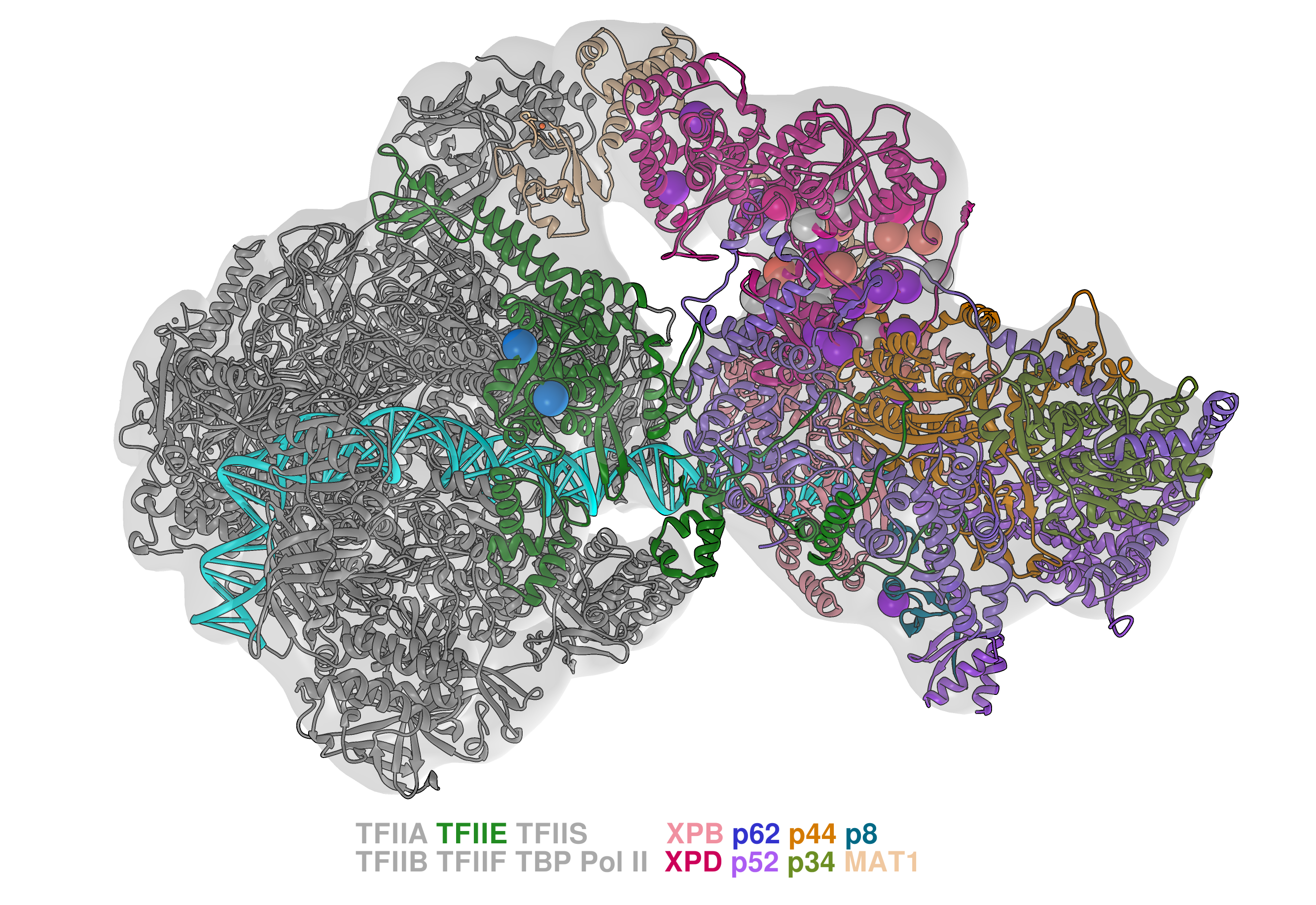
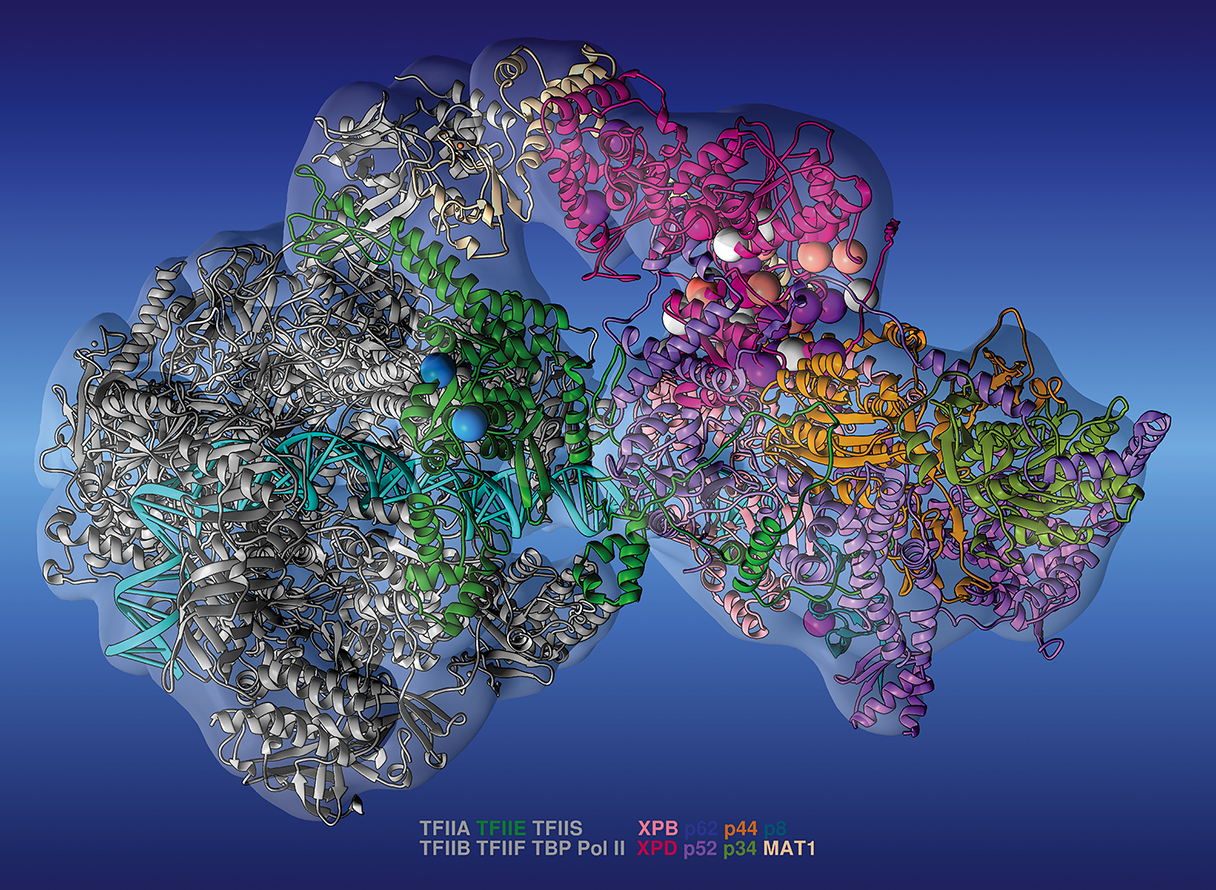
    Oak Ridge National Lab highlights our recent work on the transcription preinitiation complex (PIC): “Summit Charts a Course to Uncover the Origins of Genetic Diseases”.

  • New paper in Nature Structural & Molecular Biology

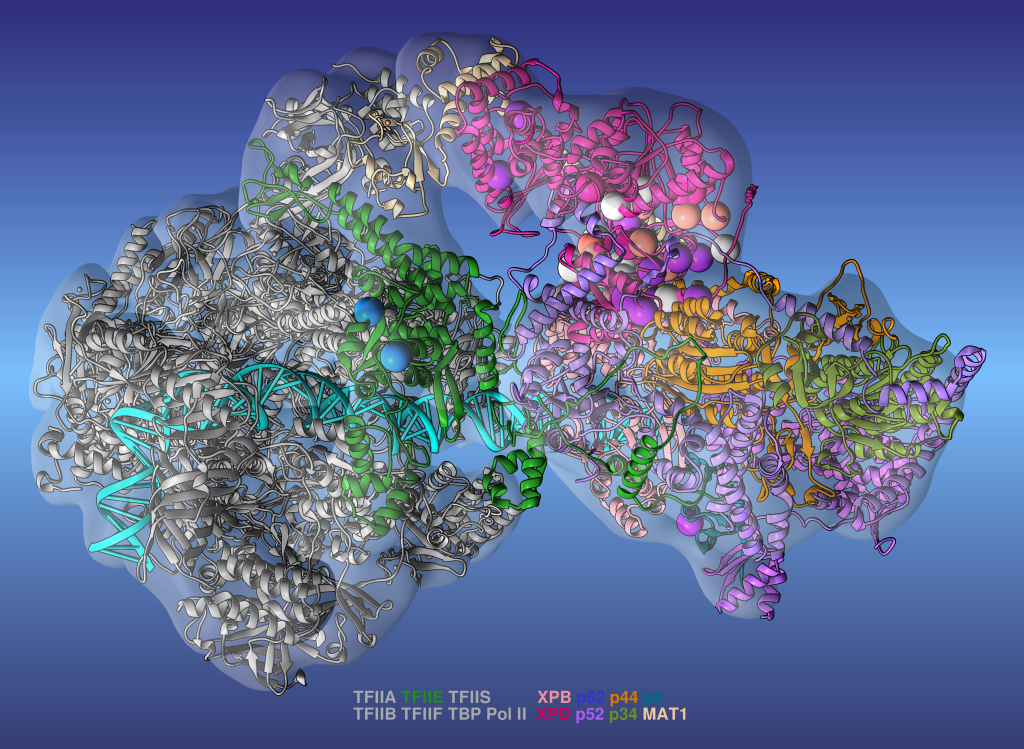
    image7Congratulation to Chunli Yan and Tom Dodd who published a new paper in the journal Nature Structural & Molecular Biology on the molecular architecture and functional dynamics of the transcription preinitiation complex (PIC).
    • Yan, C.; Dodd, T.; Tainer, J.A.; He, Y.; Tsutakawa, S.E.; & Ivanov, I.* Transcription preinitiation complex structure and dynamics provide insight into genetic diseases Nature Structural & Molecular Biology (2019) in press; doi:10.1038/s41594-019-0220-3
  • New paper in the Journal of Molecular Biology

    Congratulation to group alumnus Dr. Max Xu and Dr. Chunli Yan and who published a new paper in the Journal of Molecular Biology that unravels the common origins of DNA clamp proteins’ subunit interface stability with implications for the function of these proteins in DNA replication.

  • New paper in the journal PCCP

    Congratulation to Dr. Kathleen Carter who published a new paper in the jounal Physical Chemistry Chemical Physics detailing the mechanism of sequence-specific DNA binding of a designed small molecule binder DB2277.

    1. Carter, E.K.; Laughlin, S.; Dodd, T.; Wilson, W.D. & Ivanov, I* Small molecule binders recognize DNA microstructural variations via an induced fit mechanism Physical Chemistry Chemical Physics (2019) doi:10.1039/C8CP05537H
  • Congratulations to Kathleen Carter who is our newest Ph.D. recipient

    Congratulations to Kathleen Carter who defended her Ph.D. dissertation today. Best wishes to Kathleen for success in her future career!

  • Department of Energy issues a press release about the 2019 INCITE Awards

    INCITE2019-620x310-web

    Our group was among the 62 recipients of INCITE Awards from the U.S. Department of Energy’s Office of Science. The projects originate in national laboratories, academia, and industry, and encompass a remarkable range of scientific inquiry. Ours was among 8 projects in the areas of Biological Sciences/Biophysics awarded nationwide.

    Here are the 2019INCITEAnnouncement and the list of 2019INCITEFactSheets.

  • Group members present at the 2018 SERMACS meeting in Augusta

    Group members recently traveled to Augusta, GA to present at the 2018 Southeastern Regional Meeting of the American Chemical Society.

    sermacs2018

    Many thanks to all who presented! (Chunli Yan, Ashutosh Shandilya, Tom Dodd, Kurt Martin and Zhenyu Wang)

    At the meeting Ivaylo gave two invited talks:

    1. Emerging unified description of transcription initiation from cryo-EM and integrative computational modeling Southeast Regional Meeting of the American Chemical Society (SERMACS), Augusta, GA 2018
    2. DNA sculpting as a strategy for base extrusion and damage selection by DNA repair glycosylases Southeast Regional Meeting of the American Chemical Society (SERMACS), Augusta, GA 2018
  • Group members present at the ACS National Meeting in Boston

    Group members recently traveled to Boston, MA to present at the 2018 National Meeting of the American Chemical Society.

    ACS-boston

    Ivaylo gave a talk entitled “Emerging unified description of transcription initiation from cryo-EM and integrative computational modeling ” in the COMP division (New Frontiers in Flexible Fitting, Image Processing & Refinement of Cryo-EM Data session).

    Many thanks to Dr. Chunli Yan and Tom Dodd who also presented!

  • Group members present at SERMACS

    Group members recently traveled to Charlotte, NC to present at the 2017 Southeastern Regional Meeting of the American Chemical Society.

    sermacs-pic

    Many thanks to all who presented! (Kathleen Carter, Chunli Yan and Tom Dodd)

  • Congratulations to Bernard Scott on receiving an M.S. degree

    Congratulations to Bernard Scott who successfully defended his Masters thesis in June 2017! He has accepted an offer of admission to the Ph.D. program at the University of Utah and will continue doing research albeit in an experimental lab. We wish him all the best in his future endeavors.

  • Tom Dodd receives a Molecular Basis of Disease Fellowship

    Congratulations to Tom Dodd who received a competitive doctoral fellowship from the Molecular Basis of Disease program at Georgia State.

  • Brad Kossmann receives two doctoral research awards

    Congratulations to Brad Kossmann who received two competitive awards from Georgia State:
    1) the Award for Outstanding Research at the Ph.D. level (only two such awards are given yearly in our department)
    2) the Molecular Basis of Disease Outstanding Fellow Award

  • Tom Dodd passes written qualifying exam

    Congratulations to Tom Dodd on passing his writtten qualifying exam.

  • Congratulations to Brad Kossmann who is our next Ph.D. recipient

     head_logo_gsu

    Congratulations to Brad Kossmann who successfully defended his doctoral dissertation on March 21th 2017!  He has accepted a new position in data science based right here in Atlanta. We wish him all the best in his future endeavors.